Solar Panel Maintenance in Pakistan: 2026 Care Guide
Solar is often sold as a set-and-forget investment, but a little solar panel maintenance in Pakistan protects your output and stretches the system’s life. Dust, heat, and occasional wiring issues can quietly shave production if ignored. In 2026, a simple care routine keeps your panels performing close to their rated capacity year after year.
This guide focuses on what owners can realistically do, and where a professional should step in. Treat it as the operating manual most installers forget to hand over.
Why Solar Panel Maintenance in Pakistan Matters
Pakistan’s climate is excellent for generating solar power, but it also throws dust, pollen, and heat at your panels. A film of dust on the glass blocks sunlight and reduces how much electricity the cells can produce.
Neglected panels can lose a noticeable share of their output over a season simply from soiling. The good news is that most of this loss is fully recoverable with basic cleaning, which makes maintenance one of the highest-return habits a solar owner can build.
Heat is the other factor. High temperatures reduce panel efficiency, so good airflow beneath the array and a healthy mounting structure both help your system cope with hot months.
How Often Should You Clean Solar Panels?
Cleaning frequency depends on your local dust levels. Homes near unpaved roads or construction sites need attention more often than those in cleaner suburbs.
As a practical rule, inspect the glass monthly and clean whenever a visible dust layer forms, typically every few weeks in dusty areas. A quick rinse in the early morning or evening, when panels are cool, is usually all it takes.
A Simple Maintenance Routine for Owners
You do not need special training for the basics. A short, consistent routine handles the majority of what a rooftop array needs.
- Rinse dust off the panels with plain water and a soft brush.
- Clean when panels are cool to avoid thermal stress on the glass.
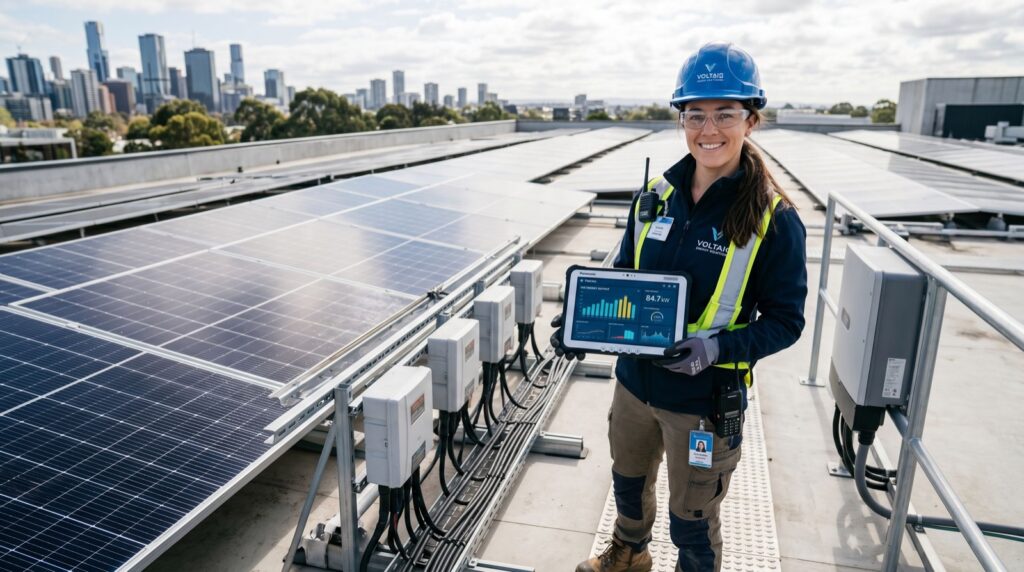
- Check your monitoring app for any sudden drop in output.
- Look for loose wiring, shading from new tree growth, or bird nests.
- Schedule a professional inspection once a year.
Avoid harsh chemicals and abrasive pads, which can scratch the protective coating. The U.S. National Renewable Energy Laboratory’s solar research resources confirm that keeping panels clean and unshaded is among the most effective ways to protect long-term performance.
What Should You Never Do Yourself?
Some tasks belong to a qualified technician. Rooftop safety and electrical work are not places to improvise.
- Do not open the inverter or touch DC wiring.
- Do not walk on the panels or lean weight on them.
- Do not attempt roof cleaning without secure footing.
- Do not ignore repeated output drops, call for service instead.
Maintenance Schedule at a Glance
A clear calendar keeps small issues from becoming expensive ones. Use the table below as a starting framework and adjust for your local dust and weather.
| Task | Frequency | Who Handles It |
|---|---|---|
| Visual dust check | Monthly | Owner |
| Water rinse cleaning | Every few weeks in dusty areas | Owner |
| Output monitoring review | Weekly | Owner |
| Full electrical inspection | Yearly | Professional |
| Inverter health check | Yearly | Professional |
The most overlooked task is monitoring. Your app is an early-warning system, and a sudden dip in daily units often points to soiling, shading, or an inverter fault long before you would notice it on your bill.
Choosing a Company for Long-Term Service
Maintenance is easier when the same company that installed your system also services it. A local team can reach your roof quickly for inspections and warranty work.
Homeowners who bought from a solar company in Gujranwala or arranged solar installation in Quetta should confirm the provider offers ongoing service contracts, not just a one-time install. Ask what annual inspection costs and how fast they respond to a fault.
When picking a maintenance partner, favor trusted professionals who document each visit and honor their warranty promptly. Reliable after-sales support is what keeps a system producing near its rated output for its full lifespan.
Seasonal Care Through the Year
Pakistan’s seasons each place different demands on a rooftop array. Adjusting your routine to match keeps production steady no matter the month.
In summer, heat and dust storms are the main threats. Rinse panels more often during dusty spells, and make sure nothing blocks the airflow beneath the array, since cooler panels produce more.
During monsoon months, rain does some cleaning for you, but it can also leave streaky residue and wash grit onto the glass. Check the panels after heavy storms for debris, leaves, or bird activity that rain alone will not clear.
In winter, output naturally dips with shorter days and a lower sun angle. This is the ideal time to book your annual professional inspection, so the system is fully tuned before the high-production months return.
What Are the Warning Signs of a Problem?
Your system usually signals trouble before it fails outright. Learning to read those signs saves both money and downtime.
A steady, unexplained drop in daily units is the clearest red flag. Other signs include error codes on the inverter, visible hot spots or discoloration on a panel, and tripping breakers. If you notice any of these, stop and call a technician rather than experimenting on the roof yourself.
Frequently Asked Questions
How much output do dirty solar panels lose?
A heavy dust layer can reduce production by a meaningful margin over a season, though the exact loss varies with local conditions. Regular rinsing recovers almost all of that lost output at very little cost.
Can I clean solar panels with tap water?
Yes, plain water and a soft brush are usually enough for routine cleaning. Clean early or late when panels are cool, and skip harsh chemicals that can damage the protective coating.
How long do solar panels last with good maintenance?
Well-maintained panels commonly perform for around 25 years and often longer at reduced output. Consistent cleaning and annual professional checks help them stay close to their rated capacity throughout that period.
Do I need a maintenance contract in 2026?
A contract is not mandatory, but an annual professional inspection is worth budgeting for. It catches inverter and wiring issues early, protecting both your output and your warranty coverage.
Final Thoughts on Solar Panel Maintenance in Pakistan
Solar panel maintenance in Pakistan is simple, low-cost, and one of the best ways to protect your investment. Keep the glass clean, watch your monitoring app, and book a professional inspection once a year.
Build that routine in 2026 and your system will reward you with steady, low-cost power for decades. If you have not scheduled a check-up recently, contact a trusted local installer this week and put annual servicing on the calendar.